Ringing glass tubes, each containing a rising executive elevator. Postmodern chandeliers twinkling. Underpinning it all, though, sad to say, that thug heart. Delicate luxury elegance riding in an armoured car.
Friday, 8 August 2014
bine☃: PATIENCE
Ringing glass tubes, each containing a rising executive elevator. Postmodern chandeliers twinkling. Underpinning it all, though, sad to say, that thug heart. Delicate luxury elegance riding in an armoured car.


Thursday, 7 August 2014
System Focus: Gleaming Grey

The cover of bine☃'s IT HURTS 2 INHALE
The next System Focus is here, and it's on a new wave of gleaming grey, platinum beats (click here to read). It looks at producers such as bine☃, DYNOOO, Dutch E Germ, M-O-R-S-E, Sentinel, Subaeris, Weed Konducta, and James Ferraro on his new SUKI GIRLZ, and how their music is made of metal, glass, tasers and luxury. I'll post some of the best tracks from it and relevant to it up here in the coming days.
Beat-making is typically a low-concept process, and such styles emerge organically like storms over the sea. In the past few months, and in many ways over the past few years, one has emerged with a particular brooding, hi-tech, alienated feel, spanning hip-hop and more experimental forms. It’s marked out by metallic or glassy sounds, spurts of cybernetic hi-hats, atmospheric synth pads washed in reverb, a downcast, captivated, sometimes almost depressive mood, and the vague but provocative suggestion of luxury and distant climes...

sentinel's hybrid
If these beats were made of something, it might be platinum, the most precious metal. Platinum is the gold beyond gold... Like a symbol for a kind of empty wealth addiction, platinum is a lonely, joyless metal, somehow more inhuman than all the others. It’s highly unreactive, but that’s just another way of saying it won’t tarnish, remaining intimidatingly perfect. Like the music of Drake, The Weeknd and Kanye on Yeezus, platinum beats bring the golden bling associated with some more straightforwardly entertaining hip-hop beats styles into a grim, heavy, flawless, extreme, post-human and, eventually, downright weird greyness...

DYNOOO's These Flaws Are Mine to War With
In any case, there’s certainly a lot of metal in these tracks, clanging and gleaming between the struts of percussion like commodities laid out all nice in a window display. But these tracks also suggest cars on the assembly line, pieced together by the stop-start movements of robotic arms. Tuned metal percussion (or ‘metallophones’) has been used by both Ferraro and Al Qadiri since 2011...

M.E.S.H's Scythians
Glass (at least traditionally) is what screens are made of and it’s been a popular office-block building material lately, it divides and shields people from the outside world—or the inside world. Glass can be both beautiful and dangerous, it’s delicate, precarious; hitting it, even for music, is asking for trouble. Or maybe the glass sounds are really diamonds. In any case, it’s often difficult to tell the sonic difference between glass and metal, so musically speaking they merge into the same substance: hard, cold, inorganic, mirror-like...
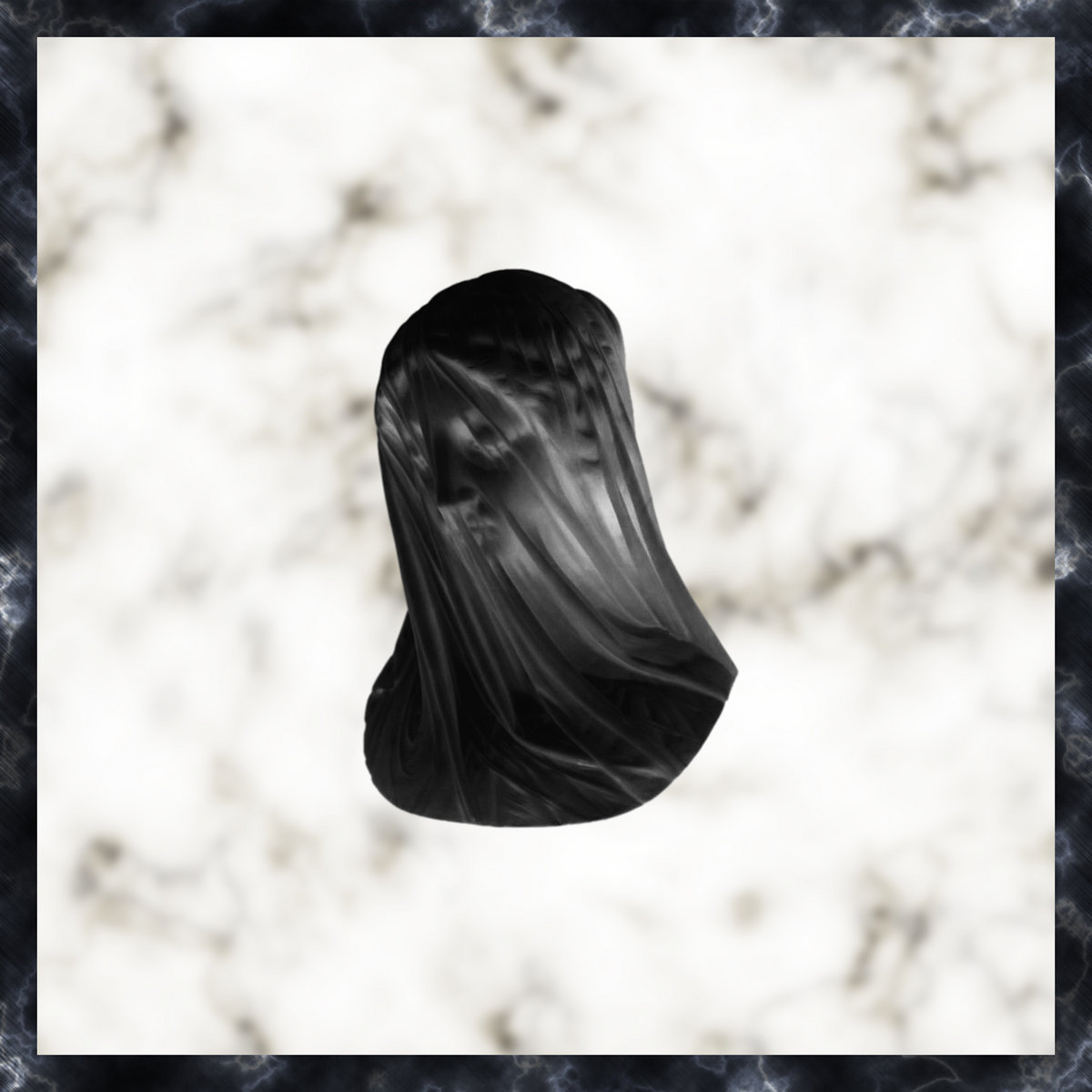
M-O-R-S-E's Empty
Rather than using it as just another beat-making tool, these producers really seem to understand the inherently strange qualities of this percussive structure. It’s a thin, rapid-fire sound that at first seems too pervasive and mechanical to be pleasurable, but soon makes a compelling contrast to the smoother material beneath it. The sound’s technological connotations are many—it could be a robotic hummingbird, a detailed manufacturing process using a tiny drill or jackhammer, a money-counting machine, or even the taser that police forces and militaries all over the world are now armed with...

bine☃'s THINGS WILL BE BETTER FROM NOW ON
Something else that marks out this style, underlining but complicating its theme of luxury, are the hints of ethnicity that run through it, adding a dimension of globalisation to its darkness... Ferraro reflects the globalisation of luxury lifestyle on SUKI GIRLZ (the word ‘Suki’ has many different significances across Asia), many of its tracks (for example, “2″ and “19″) opening with synthesised female voices boasting simultaneously with Asian accents or in Asian languages about their status and decadent appeals, as if they were talking commodities made bilingual for sale to the travelling business class...

James Ferraro's SUKI GIRLZ
DYNOOO’s brilliant tape These Flaws Are Mine To War With is particularly rich in this way, each track a cyborg concatenation of fragments—not so much a beat as a bouquet of loops—that, like beats by Karmelloz, nonetheless suggest a coherent viewpoint, maybe that of an algorithmic science probe on the surface of an alien(ated) Earth. Alongside airy and glassy tones, DYNOOO places the cries of eagles, synthesised speech, laser guns, and what could be torn pieces of film music. The suggestion is of an intelligence that has great power but, frighteningly, is nouveau-information-riche and not yet fully mature...
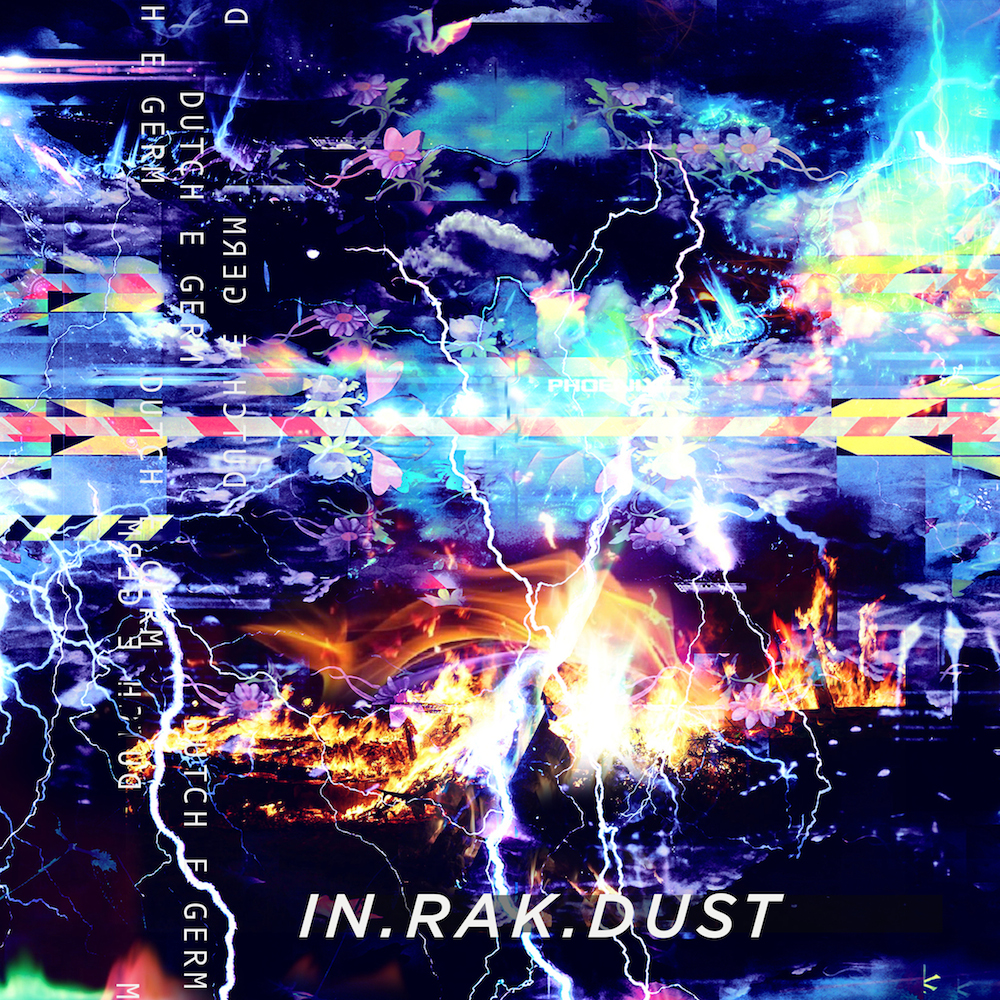
Dutch E Germ's In.Rak.Dust
Wednesday, 6 August 2014
voltex: firefly
tac_: little_courage & my_magic
Then there’s tac_ for whom vocaloids are a perfect element gently woven into dainty, elfin compositions. Another sound tac_ frequently uses is that of the mellotron, which in many ways is the forerunner of the vocaloid, being an analogue sample-based synthesiser where keys were attached to tape loops featuring recorded instruments such as strings and flutes (you might know it from the opening to “Strawberry Fields Forever”). Both dolls designed to emulate more organic musics, the vocaloid and mellotron complement one another not as fake, insufficient, robotic entities, but as toys that have run away to a miniature fantasy kingdom where they can now be loved only by history and nature.
Alongside the mellotron, the vocaloid becomes a velveteen rabbit, fleeing from revulsion and supercession and becoming magically real among the fireflies, brambles and dark blue evenings.
Sunday, 3 August 2014
polygron prompt: avarice
Sorry for the mp3-blogging pause. Gonna upload a few of my favourite vocaloid tracks (in the wake of my piece featuring em). This one, 'Avarice' by Polygron Prompt, is from 2011, but it really got me, bringing out the strange, fragile quality of the medium. It's Hatsune Miku, and she's singing against a techy jungly beat that suggests a futuristic computer game circa 1998, all its constituent elements propelled forward and spread out into mystique diffusion as if in search of bots to frag. The kicker is the tangibly dissonant way Miku sits on top of it, especially at the ends of her phrases. Intended or not, it's the perfect setting for vocaloids' technocratic uncanniness.
Thursday, 17 July 2014
System Focus: The Evolution of the Voice in the Digital Landscape

You might say that the voice is the most human of all the elements in music. It comes from deep within our bodies, organically, ever since we came to be human, and indeed long before. It is probably the first musical instrument that we learned to recognise, and, since it is built into most of us, the first that we learn to use. Yet the voice is much more than just a sound, however primordial. It represents a person: their activity, agency, opinions, experience, their self-projection. In doing so, it differentiates itself from the environment around it, musical or cultural, either drawing power from this context or somehow standing against it. Or, most intriguingly, doing both at the same time...

Roger Troutman of Zapp using a talkbox
There’s a tendency to regard the digital world as non-human, as encroaching on humanity, but I think that’s quite wrong. The internet is not just a landscape made up of technology, it is one made up of humanity. Like it or not, Facebook and Twitter are made of people, and of people’s voices in particular. People’s voices and the lives behind them reduced to assertions, opinions, arguments, anxieties, reduced to pieces of data, to samples—but sounding out nonetheless. And this landscape is reflected and explored in the music it produces, where the lines between the human and its technological environment are no longer clearly drawn...The final tracks of both albums (called “Landscapes” on Spirit Sign) feature synthesised speech, as if completing a transition from human to machine, yet it’s set against some of Nima’s most elegant instrumental textures. At the end of SEE FEEL REEL, a voice almost obsessively repeats crypto-romantic refrains such as I’m… in love… with… the… digital age… over strings, before switching to breathy voice-like tones as if it were dissolving into air. Nima’s music certainly lives in the digital age, and all the elements within it expand to fill the enormous space that results...

Nima's SEE FEEL REEL
Both musically and conceptually, the album suggests a dream cityscape as it might have appeared at the turn of the 1990s, a weird, multicoloured, postmodern union of the past and the future, where citizens of all professions glide beatifically down immaculate beige sidewalks past bright red fire stations, neo-1930s banking skyscrapers, parping bandstands, faux-eighteenth-century colleges, and green, green, lawns, all presided over by a moustachioed mayor who warmly greets his public at the exponential tree-planting and ribbon-cutting ceremonies. One of the crucial components of this digital landscape—now looking rather misplaced, both poignant and arrogant, in the post-recession era—is the voice. Fittingly, the vocals, and the human beings hinted at behind it, are just yet further objects swirling in the cityscape, forming its melodies, scatting ooh and aah or urging Work it! and Get down like feckless, automated cheerleaders. It’s a landscape we might recognize and enjoy with a little disquiet mixed in...
Metallic Ghosts' The City of Ableton
Sampling processes of all kinds appear in Blank Banshee’s album Blank Banshee 1, a masterwork of the new digital psychedelia, and it’s quite easy not to really notice that the album is filled with voices at every turn, much like its videos are filled with virtual beings, objects and environments. Despite the fact that these voices are pitched up, down and all around, they’re never more than virtual avatars of their owners: social media masks that are both freeing and constraining. Freeing in that they allow the voice to move to new places and be new people, constraining in that these surrogate people are not yet as infinitely flexible and free as they would like to think they are, and might still have an air of the uncanny about them. This double-edged nature of the human user in the modern digital playground, its mixture of strange new opportunities and dangers, might be why one of the tracks goes by the name “Anxiety Online...”

Blank Banshee's Blank Banshee 1
Voltex makes gorgeous footwork-like tracks from joyfully leaping vocaloids and stereophonically pingponging synths. Then there’s tac_ for whom vocaloids are a perfect element gently woven into dainty, elfin compositions. Another sound tac_ frequently uses is that of the mellotron, which in many ways is the forerunner of the vocaloid, being an analogue sample-based synthesiser where keys were attached to tape loops featuring recorded instruments such as strings and flutes (you might know it from the opening to “Strawberry Fields Forever”). Both dolls designed to emulate more organic musics, the vocaloid and mellotron complement one another not as fake, insufficient, robotic entities, but as toys that have run away to a miniature fantasy kingdom where they can now be loved only by history and nature...
Top Vocaloid Hatsune Miku
Subscribe to:
Posts (Atom)


 Posts
Posts

