Tuesday, 30 December 2014

System Focus: Fandom Music Is As Underground As It Gets

Horizon's 'Confinis'
Possibly the most out-there System Focus yet, this one looks at recently-emerged fandoms and the way they practice their fandom through music-making online (click here to read). It looks at Pokémon, Adventure Time, Minecraft, Homestuck and My Little Pony. There's some really unusual stuff in this one..
One of the major drivers of underground music culture is sincerity. The underground seeks musicians for whom making music is an art and a passion, rather than a performance or a get-rich-quick scheme. You might have heard a lot about 'The New Sincerity' or 'post-irony,' ideas dating back to the 1980s which have been applied to music with a notable level of (usually positive) emotion and innocent frankness. But the search for sincerity goes back as far as its perceived opposites in, say, industrial capitalism go—back to the Romantics and beyond. That's not to say that all underground music culture is sincere. Irony and satire are arguably stronger than ever as the underground re-engages with hi-tech modernity, shunning the ubiquitous, twee, and now almost empty sincerities of the indie aesthetic. But to find music today made from pure positive passion alone, try an online DIY music almost completely outside the remit of the hip underground sites: the music of fandom...
Fandom music, especially by the most popular musicians, is very well made. It doesn't tend towards the minimalism and primitivism in some areas of the underground, where too much effort and ability—especially on non-vintage equipment—can get a bit uncool. (But even when it isn't well made in the traditional sense, it's interesting for its surprising results.) In the same vein, fandom music tends to be complex—it often uses the best and broadest tools available to contemporary musicians, and likes to draw on many different instruments, harmonies and forms in the course of a song or album, rather than just deploying a few riffs or loops. And if variety itself can be a characteristic, it's definitely a characteristic of fandom music, which manifests in any and all genres, some which don't even seem to be genres. One of the most tangible qualities of fandom music, however, is linked to its sincerity—it explores a level of emotional or sentimental expression that more cynical listeners would consider kitsch...

Lethe Wept on Fortissimo Hall
The tracks by Pengosolvent are quite unlike anything else—contemporary orchestral VGM squashed imaginatively into a jovial, frenetic and slightly disturbing blur. Try the crazy "Breaktime Over," the highly cute "Enamored Regard" (below), or the proper creepy ghost-type "Paved With Good Intentions" (belated happy Halloween)...

Intriguingly, Adventure Time is a recurring reference point for some fairly parental-advisory hip-hop—here, here, and here. Then there's Oddpauly, who raps about the attractions of the show on one of his tracks. Pauly also has a YouTube channel featuring a music video of his highlight track "Rain," and a video of him playing Minecraft while eating Fruit Rollups...
But with a game as rich as Minecraft, there's also music within it too, and this is where things get really interesting. The game has 'note blocks,' which can be directed to play a certain pitch and change timbre depending on what material they're on top of. There's also a form of electrical wiring that can activate the blocks remotely (using a switch) and in sequence, setting off the notes like a pack of dominoes. Thus by placing several note blocks in the right configuration and activating them through the wires, players can create music boxes that can play certain tunes, even polyphonically. Here's a tutorial on how it's done. To really get a polyphonic tune playing for its full length, players have to create vast structures several stories high and almost a kilometer in length, that witnesses can move around inside as the music plays. Then they upload the videos to YouTube. This is music and architecture as the very same thing...
The largest musical instruments in the virtual world
One of the most visually striking fandoms online is Homestuck, an epic webcomic about some teens who inadvertently bring about the end of the world, and then get involved with these bizarre troll-like beings that are perfect to dress up as. But don't take it from me—there's a fan song to introduce you to it all... The weirdly great-looking official Homestuck Bandcamp page compiles the soundtrack (made by fans) music and more, and it tends to subtly evade genre, skipping through all kinds of sound worlds, seemingly guided more by emotion (and whatever's going on with those trolls) than form. I've been oddly mesmerized by Erik "Jit" Scheele's One Year Older and the cosmically soppy Song of Skaia.
Artwork for 'Firefly Cloud' from Erik "Jit" Scheele's One Year Older
The fandom has a hefty contingent of Bandcamp customers whose pony avatars can be seen lining up on the pages of the most popular albums. But the music only rarely reflects the child-like aesthetic of the show, often bringing out the darker, more romantic connotations of characters and its stories. Alongside sometimes Friedrich-like digital paintings of the relevant ponies, pony musicians regularly put weighty, grand, maximalist and very technically accomplished music. There's punk rock, happy club sounds, ambient electronic, funky song-writing, hardcore, soft rock, epic orchestral, and metal. One of the most popular artists is Eurobeat Brony, who has three volumes of hyperactive 'Super Ponybeat.' Another is TAPS, who has an ear for glitchy vocal science deriving from samples of the show: ponies fractured and suspended in enormous spaces...
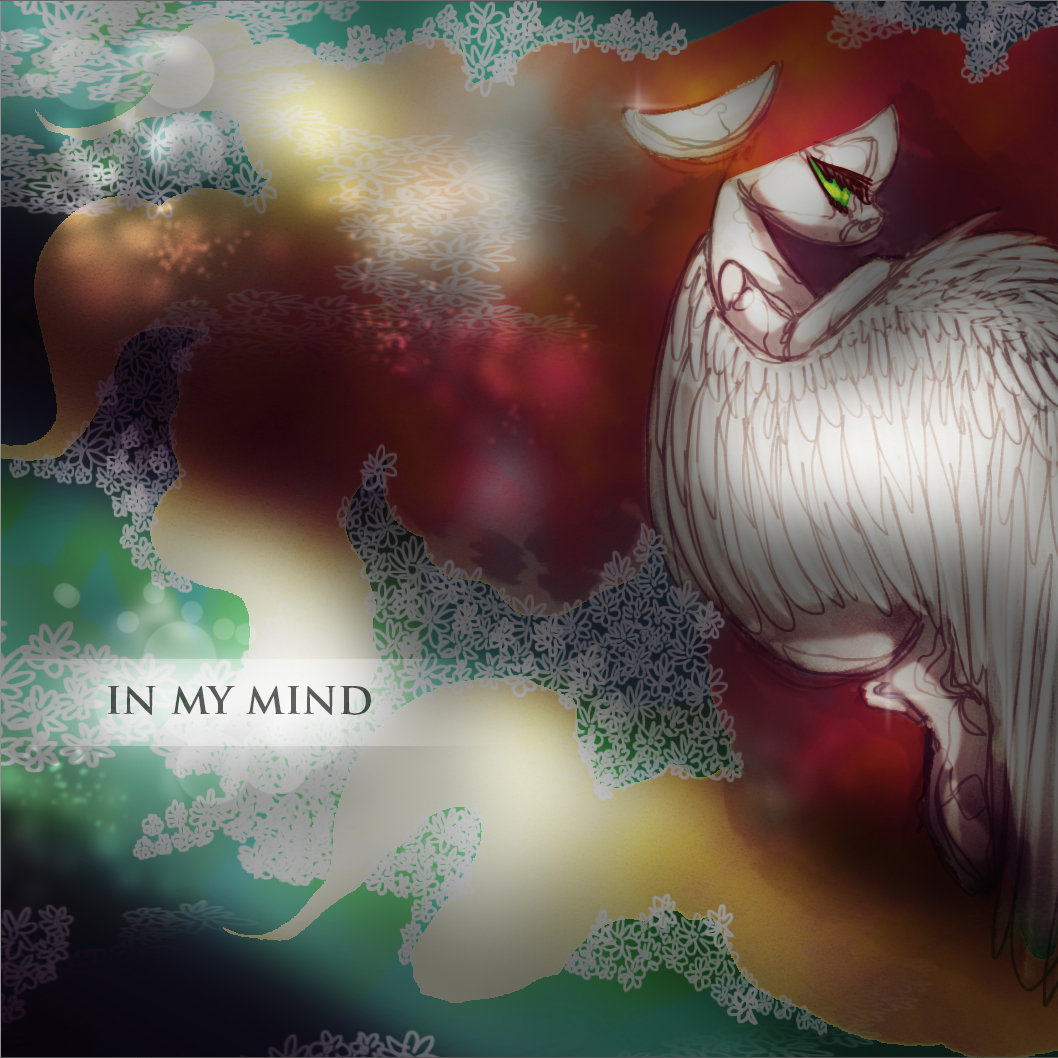
 Feather's In My Mind

System Focus: High Speed Sounds to Blister Even Internet-Accelerated Brains

DV-i's 'Optical Mode' in its browser context
Proper packed System Focus on speed cuteness (click here to read). Kind of a follow-up to the earlier cuteness article (here), with a look at jungle and footwork references too. Featuring collectives such as JACK댄스, Activia Benz, Donky Pitch, STHWST, Hope Sick Cola, Mecha Yuri, Magic Yume Records and Manicure Records and artists like Guy Akimoto, DV-i, Miami Mais, Maxo, Yeongrak, Friendly Sneakrz, Onika, Ba-Kuura, Xyloid, So So In Luv, Lockbox, DZA, Doss, Yandere and more. I made a tracklist for it, but not all of it ended up in the SoundCloud playlist at the bottom of the article. Here it is in full (click the links to listen):
  1. Guy Akimoto: BaeBae
  2. DV-i: Shenzhen Miracle
  3. Miami Mais: Goose
  4. Maxo: Hiya
  5. Yeongrak: estrogen
  6. Friendly Sneakrz: Morning
  7. Onika: Bffs
  8. Ba-Kuura: Dual Wield
  9. Bames: BYB (Pablo)
  10. Xyloid: Neptune Pool
  11. SO SO IN LUV: 1 + 0nly
  12. Lockbox: Human Makeout
  13. Maxo: Snow Other
  14. Yeongrak: shabushabu
  15. DV-i: Fractal Mode
  16. Lil Mystic: Hiryo
  17. Friendly Sneakrz: Restless
  18. WALLACE: OutAspAce
  19. DZA: Fluffernutter
  20. Lockbox: Brainhead
  21. Yeongrak: flowerkingdom
  22. Doss: Extended Mix
  23. Ba-Kuura: Let's Go
  24. Kaleidoscope: Royal Flash
  25. Slugabed: Pure El Nino Vibes
  26. Yeongrak: all i do
  27. Xyloid: Zephyr
  28. Yandere: u know

Lockbox's Prince Soul Grenade
What a month it's been for cuteness! The deliciously hyper-camp new aesthetic, in its element online, is most famously embodied by the PC Music label—everyone's been messaging and tweeting about them! Then recently the movement got its anthem in the form of "Hey QT" by QT, a snappy lil number which is also the official tune of a new energy drink I can't wait to taste (that's the artwork above). But QT and PC are only the cherry on top of a vast cutie pie. Not long ago, #Feelings boss Ben Aqua set the net ablaze with his Resident Advisor podcast, a celebration of cute club intensity from all over the clouds. Finn Diesel's DIS Magazine show on Rinse FM, a haven for cuteness and other flavors since May and previously featuring SOPHIE, A. G. Cook and Felicita, entered its third installment on September 25, introducing Onika and So So In Luv. And trans-national club sensation JACK댄스 has returned, this time in New York with a whole new roster of US-based cuties...
http://www.dummymag.com/media/img/cache/media/uploads/new_music/So_So_In_Luv_1_0nly_750_750_90_s.jpg 
 So So in Luv: 1 + 0nly
Those high twinkly notes, that high-speed syncopation, that high helium voice. Hints of '90s hardcore rushing unrepentantly into the digital age. And the network that links JACK댄스, DIS Magazine, Ben Aqua and PC Music with labels like Activia Benz, Donky Pitch, STHWST, Hope Sick Cola, Mecha Yuri, Manicure Records and more has converged on this style from many different points of origin: jungle and hardcore, seapunk, footwork, trap, the sparkly HudMo-Rustie sound, pop, J-pop, video game music and experimental breaks. Just as chopped and screwed lethargy seems to be everywhere between beats and vaporwave, this convergence amounts to the return of speed and complexity in ways guaranteed to blister even your internet-accelerated brain...


Guy Akimoto's BaeBae EP, something of an ode to digital communication, begins with the itchy-fingered title track, which includes a demure robot lady announcing, Reality escaping me, emotions with velocity, log me on, sign me out, give me something to type about. Hype tunes, low tides, sending emails all night. Me and bae, bae and me, HDMI, USB...

Indie Goes Hi-Tech: The End of Analogue Warmth and Cosy Nostalgia (Berlin Music Week talk)


At Berlin Music Week I gave a talk (video above) that summed up the wider trend behind basically everything I've written about for the past two years: 'hi-tech,' which I like to oppose to traditional indie aesthetics. It includes a summary of many of its sub-trends which looked at in past articles. With apologies for the apparent reductiveness, the slides for the talk are below in all PowerPoint 2003's splendor.


The Online Underground: A New Kind of Punk? (Resident Advisor article)

 
Resident Advisor suggested I write an article for them about the emerging online underground, and the result was my most comprehensive (and polemical) statement on the topic to date (click here to read). It's running theme was a comparison to late-C20th punk and indie, and it went into the aesthetics of vaporwave and PC Music too. The piece appeared alongside a (controversial but, I thought, pretty brilliant) podcast by #Feelings boss Ben Aqua.

How many times has the concept of punk been redefined? Far too many to count, and besides, no one seems to want to label music any more. Even in the early '90s, barely 15 years into its life, the definition of punk had been broadened and warped in surprising directions—punk could mean naive pop, heavy metal in the charts, or even doing something yourself, whatever that might be. In a new music culture where guitars have been replaced by cracked copies of Ableton, bands have been replaced by anonymous individuals with SoundCloud accounts, and where rock as such hasn't really been on the underground agenda for years, what significance does punk still have?...

In each of these areas, the processes and problems of the online underground were those of the punk underground in the late 20th century. Building a musical culture on SoundCloud, Bandcamp and Facebook might seem new and strange (if only due to the technology involved) or—more negatively—unimportant or a sign of decline, but these paradigm shifts have happened to the underground before, and they hint at the opportunities and difficulties of the current situation....
Just like the classic punks, PC Music can be heard as dramatizing the decline of good taste at the hands of modernity, and in 2014 that means noble underground traditions like all that monochrome club/post-club music that rakes reverentially and melancholically through 30 years of analogue production all being displaced by digital decadence, rampant excess and fucking children. PC Music are trolling old ravers, the generation that built the hardcore continuum; they're trolling old punks and their insistence on realism. They're saying, "We might as well sound like this. In a world of gloss and accelerated desire, this is what society made us." And in this regard, they're punks...

Monday, 13 October 2014

System Focus: Bridging the Singular Sounds of Lisbon's Underground

My most in-depth System Focus essay yet involved a trip to Lisbon in search of Portugal's electronic underground (click here to read). It focuses mainly on the AVNL and Golden Mist record labels and includes artists such as RAP/RAP/RAP, Old Manual, Marie Dior, Conan Osiris, Lake Haze, Onto Hek, Hajtand, Ana3, Purple and Pedro o Mau. But it also looks at the way influences and genres (kizomba, tarraxo, kuduro) work in the emerging scene, and particularly the role the URL vs IRL relationship plays in connection with global, post-colonial and local forces.

How does a musical community form? What binds it together and keeps it going? Where is the overlap between personal and musical connections? And does it really matter where you're from, or where you're going?...
Golden Mist flyer
Something certainly seemed to be going on in Portugal this year, and it wasn't limited to the new Afro-Portuguese sound either. What I found by chasing hyperlinks until I reached a physical city—unsurprisingly, perhaps—was a curious and unique mixture of URL and IRL. As the above writers couldn't fail to observe, Lisbon's Afro-Portuguese and white communities are highly separated by geography and culture, considerably more so than in London or New York. Where Príncipe and friends had formed a very local scene, albeit one with global roots, the (as it turned out) relatively whiter and wealthier musicians in the network I sought, many of whom had art-school backgrounds, had one foot in the physical necessities and local musics of Portugal, and one foot in global new-music culture. For them, the internet is both thousands of miles away and right next door. This community had almost unconsciously used this duality to develop an unusual and distinctive flavor, one that's now beginning to leave bedrooms and laptops and, perhaps, Portugal altogether...
 Manuel Robim (Old Manual) and Tiago Miranda (Conan Osiris)
Similarly, the name 'AVNL' is a gothy, MNML-ised version of Avenal, a part of town where they all lived as students, and the Bandcamp label formed as an informal platform to put out their different projects and collaborations. Manuel tells me that the three would go "driving around at night in a car, outside the city and it was like fields and endless roads, and we did that listening to contemporary music, and I daresay that's how things started." Cars do seem to crop up repeatedly in the imagery around Tiago R and Manuel's music...

Tiago Rodrigues (RAP/RAP/RAP)
As befits someone whose YouTube avatar is an internet explorer symbol, Tiago R always seems to originate from the information superhighway. Earlier this year, the result of Gonçalo's Facebook message was Killing, one of RAP/RAP/RAP's most comprehensive records to date, a panorama of club tics, console percussion and cosmic stares with a faint luxury theme that could make it platinum beat going lounge. Another album, Matisse Graveyard, appeared on AVNL and was shortly followed by an album of field recordings capturing nocturnal crickets in Viseu. Notably prolific, Tiago R admits that he's "obsessed with making tracks. I'm doing it for me." And it's not just sounds but "the aesthetic—the video, the image. For me the music doesn't work just for itself, it has to be related with an image or a video..."
Manuel Robim (Old Manual). Image by Francisca Tadeu.
At the centre of [Manuel Robim's] sound these days are synths—heavy synths, grand staircases of them, varying in their closeness to club styles such as anthemic house, trance and hardstyle. "I wish I had a house made of synth," he jokes. "I would sleep in a synth bed if I could." He's especially into trance pop from around the turn of the millennium—acts like ATB, whose kitsch status is about due to expire and get remade as an affectionate reference point for underground tastes. Earlier this year, Old Manuel's most comprehensive release, リング ('Ringu'), landed on Aural Sects (one of the labels I interviewed for the second System Focus column) running a gamut of rock-hard synth club styles and exploring Afro-Portuguese rhythms in tracks such as "Pump" and "New Goal..."
 Diogo Lima (Lost Tapes) and Tiago Miranda (Conan Osiris)
Marie Dior has cycled through several kinds of club sounds, including the exploratory, subterranean loops of Minimalist; Repetitive; Slow; Sad; Dance; Music, the hard house of House is Where the Beat Is (again, on Aural Sects) and the deep oceans of "6' 2"." His most unique flavors appear on releases like 0061565377-(F), Encore, Again, Encore, and the baffling Euphrates—works whose contours seem to be generated by unfathomable non-human logics, and yet they gently caress you with anemone tentacles...
Gonçalo Salgado (Lake Haze)
Golden Mist, however, has been dancefloor-focused from the beginning. Gonçalo has produced under the name Lake Haze, releasing EPs of London-flavored grime and garage for Unknown to the Unknown (Force of Nature EP) and inventive techno for One Eyed Jacks (Ruff Cuts EP). He founded Golden Mist as a genreless home for Portuguese and Portugal-based musicians: "I thought [of] the label as a catalogue, a variety of styles, not like a grime label, a house label, a techno label. I wanted to show the world what our artists were and the internet was the tool to communicate to the world." Ironically, by keeping things Portuguese, the label becomes more diverse. And the label's extremely diverse: alongside RAP/RAP/RAP's Killing, Ana3's Street Clamor has exhilarating, high-energy, syncopated house, Onto Hek's Object Oriented Ontology moodily explores lo-fi techno soundscapes, and Hajtand's Electric Boulevard offers three beauties of immaculately composed synthwave. May's Lisbon Underground Catalogue Volume 1 collects a number of other artists, and Shcuro's upcoming Black Mist EP takes on a cybernetic stance...
Cover of Marie Dior's House is Where the Beat Is
I ask the group what they think a Lisbon sound might be, but for them it's largely that of someone else. What they emphasize instead is the diversity of their community—a collective of individual artists rather than one working on a particular sound. "It's very hard to create a movement in Lisbon based on what one guy created," explains Gonçalo. "Not like London, London is a city of movements in electronic music. Lisbon is not as good to create movements, but it's great to create diversity. Everyone is singular, artisans." Tiago M, sat at the end of the table with his long black hair in two braids, agrees. "Our relationship wasn't borne out of musical connections. Our music is really different but it collides on some vortexes that make us common in some way, even if it's not in the hearing sense. Our sameness is that we all do this alone, we do it ourselves."

Cover of Ana3's Street Clamor
Kizomba is like the Afro-Portuguese R&B—slow, sultry, a little cheesy, ubiquitous. Whether exuding from cars or shops, you're never far away from its lolloping charisma. Later that evening, before visiting the city's leading club Lux, Gonçalo, Diogo L and I sit in a gently neon café with tiny cups of Portuguese coffee and glasses of Super Bock beer—apparently most clubbers have decided that drinking in the clubs is too expensive, and hit the streets for hours first instead—and we hear kizomba ballads one after the other, some eliciting an almost embarrassed grin of recognition from the guys...
Cover of Old Manual's リング
Tiago R describes one of his biggest influences as Rom Di Prisco, who wrote hi-tech video game music for titles such as racing game Need For Speed and sci-fi shooter Unreal Tournament over a decade ago. Manuel had mentioned ATB, whose hit "9pm (Till I Come)" provided the intro theme for the PS1 game FIFA Premier League All Stars 1999. It might go some way to explaining the prevalence of sports culture in his and Tiago R's work, and listening again I start to hear RAP/RAP/RAP tracks as disassembled video games playing themselves, and as Old Manual's tracks as garish yet unrepentant celebrations of championship hope and glory...
Cover of RAP/RAP/RAP's Matisse Graveyard
The weather couldn't be more different from that in Lisbon days earlier—the rainiest of rain, beyond a cliché of Britain. Manuel doesn't seem thrilled with the leaky stairs in his Brick Lane digs. I begin to wonder why anyone would want to leave sunny, beautiful, reasonably priced Lisbon, with its small but unique networks of emerging sounds seemingly on the cusp of something, for London's rat race of billionaires and insane rents.But of course the grass is always greener. Portugal's major problem is still the economy... Manuel felt limited in Portugal: "It's important to expand yourself. Portugal is difficult right now to find work and even internships. It's really difficult for them to pay. There aren't a lot of opportunities. Maybe the mentality of Portuguese people in general, it's... I don't wanna say they're closed, it's just different than what I personally need, and lots of people that are going out—we need different things..."

With URL increasingly dominating IRL, and not only the internet itself but the spread of musical style and technologies like video games all over the world, the only vestige of locality might be where a birth certificate was written. The tension lies between where you have come from and where you want to go—I wanted to go to Portugal, and many of the Portuguese wanted to come to London—and it can be difficult to find an artistic curiosity about where you have come from if where you want to go looks so much better, newer, or even just more practical. Or even just different...

'Cute Computer Chaos' (Boiler Room article)


I wrote an article to go with a Boiler Room gig featuring Hudson Mohawke, Oneohtrix Point Never and QT (click here to read). It takes desire as its theme, and excavates some of the history of the contemporary cuteogeddon.

This erupting soundworld is controversial today, blasphemously flaunting its colour and excess against the monochrome lo-fi minimalism of so much electronic music and provoking accusations of infantilism and overfeeding. A decade ago, among the guitars and disco and dubstep, these lands of cute computer chaos seemed scarcely imaginable. Like coal turning into gaudy diamond under immense pressures, these musicians seem to have metamorphosed the ‘twee’ of that decade’s nu-folk and indie, as well as the wry playfulness of its gameboy grime, into the infectiously crazy grin of ‘cute’. Kitsch, you say? Oh, you mumble sweetly along to Casio and gentrify cities with cupcakes? Here’s a lavish synthesiser panorama, glittering with HD twinkle and silky vocals. You like to put a little bit of 8-bit into your dubstep? Here’s a helium hardcore extravaganza blaring with preset simulacra and convulsing towards post-human ecstasy. Be careful what you wish for. Where has this pressure, this ever more lurid escapism come from?
Daniel 'Oneohtrix Point Never' Lopatin in the video for Ford & Lopatin's 'World of Regret'
As well as enjoying this music in itself – intensely, almost to the point of panic – you notice symbols of enjoyment represented within it, now crushed and squeezed into so many objectives of hyperreal desire and compulsive fantasy: soul, swagger, sex, sparkle and sweetness. The underground has spent decades avoiding pop – now it’s out-popping pop, seizing its thrills and simulations and partying with them as hard as possible because tomorrow never really comes.